
D.E.I.: Dizzy, Ella and Improvisation
D.E.I.: Dizzy, Ella and Improvisation
ART SHOW: 150 FRANKLIN STREET GALLERY
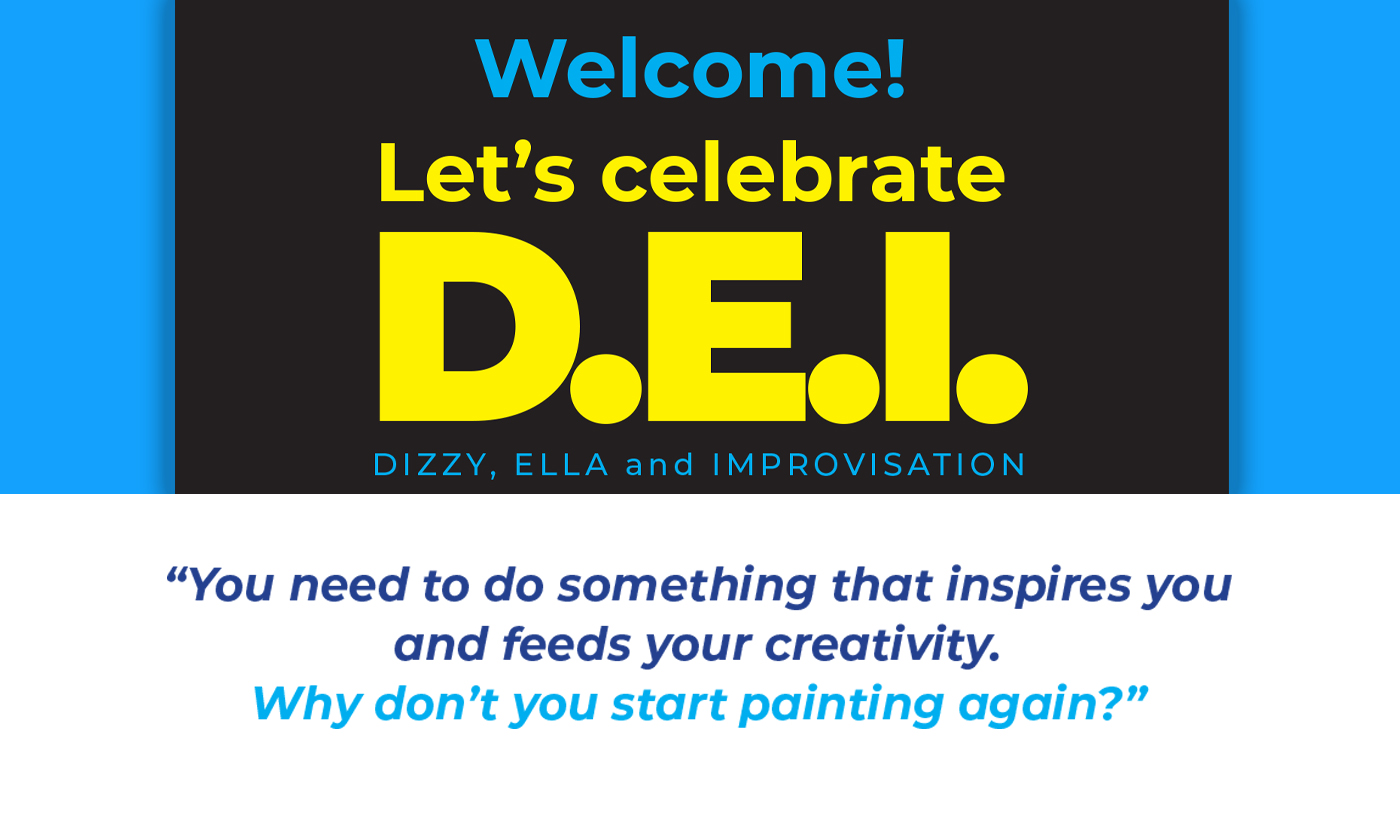
My wife’s sage counsel — coming about 10 days after the November 2024 elections — helped snap me out of a growing depression and deal with a foreboding sense that our beloved country was headed into four years of turmoil, retribution and chaos. America seemed to have chosen revenge over hope and deportation over “give me your tired, your poor, your troubled masses yearning to breathe free.” With the intimation that people of color are the primary threat to the American Dream, we would no longer work toward repairing decades of marginalization but instead further whitewash our history to avoid teaching difficult or embarrassing topics to our children.
States under conservative leadership, including Virginia, dismantled thoughtful efforts to heal hundreds of years of oppression and suppression by mandating an end to D.E.I. — diversity, equity and inclusion — across government and especially within education. As the U.S. President shook up the staff of the Smithsonian’s museums and dictated the way their exhibits are curated, I thought,
You clueless, arrogant, thin-skinned, race-baiting, culturally illiterate bully! Your revision of history deserves a loud, bold and creative rebuttal.
An artist and a musician who has a passion for jazz music, I decided to paint portraits of the composers and artists who were instrumental in creating and shaping America’s original musical art form.
So with my hand happily holding a paintbrush and my middle finger raised in defiance, I welcome you to this visual celebration of D.E.I. — Dizzy, Ella and Improvisation: Paintings of Black Jazz Masters from the 1940s through the 1960s. May it move you to listen to jazz afresh, embrace the richness of Black culture with joy and a sense of awe, and kindle a renewed hope and commitment that diversity, equity and inclusion will become our shared American ethos — in spite of the efforts of those who are trying to destroy it.
—ROBERT MOTT, Harrisonburg VA, October 3, 2025
ENJOY THE SHOW [Click the images to enlarge]
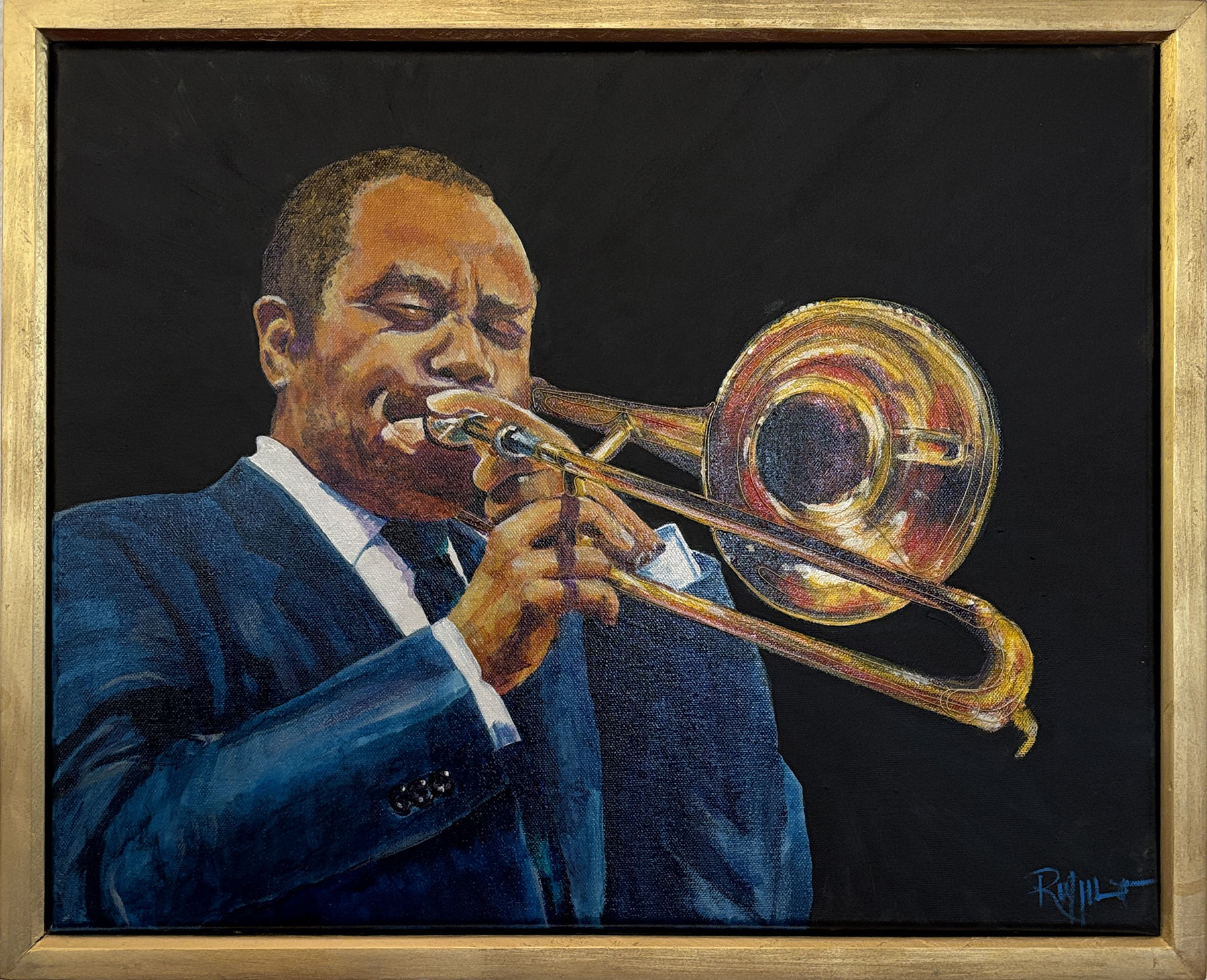
J. J. Johnson (1924–2001)
20 x 16 inches | Mixed media: Acrylic on canvas with metallic threads | 2025
From the collection of Robert and Karen Risch Mott
Early in his career, J. J. was encouraged by Dizzy Gillespie to develop his playing in the emerging Bebop style and became one of the most influential jazz trombonists, composers and bandleaders of the 20th century. “J. J. did for the trombone what Charlie Parker did for the saxophone. And all of us that are playing today wouldn’t be playing the way we’re playing if it wasn’t for what he did.” — Steve Turré
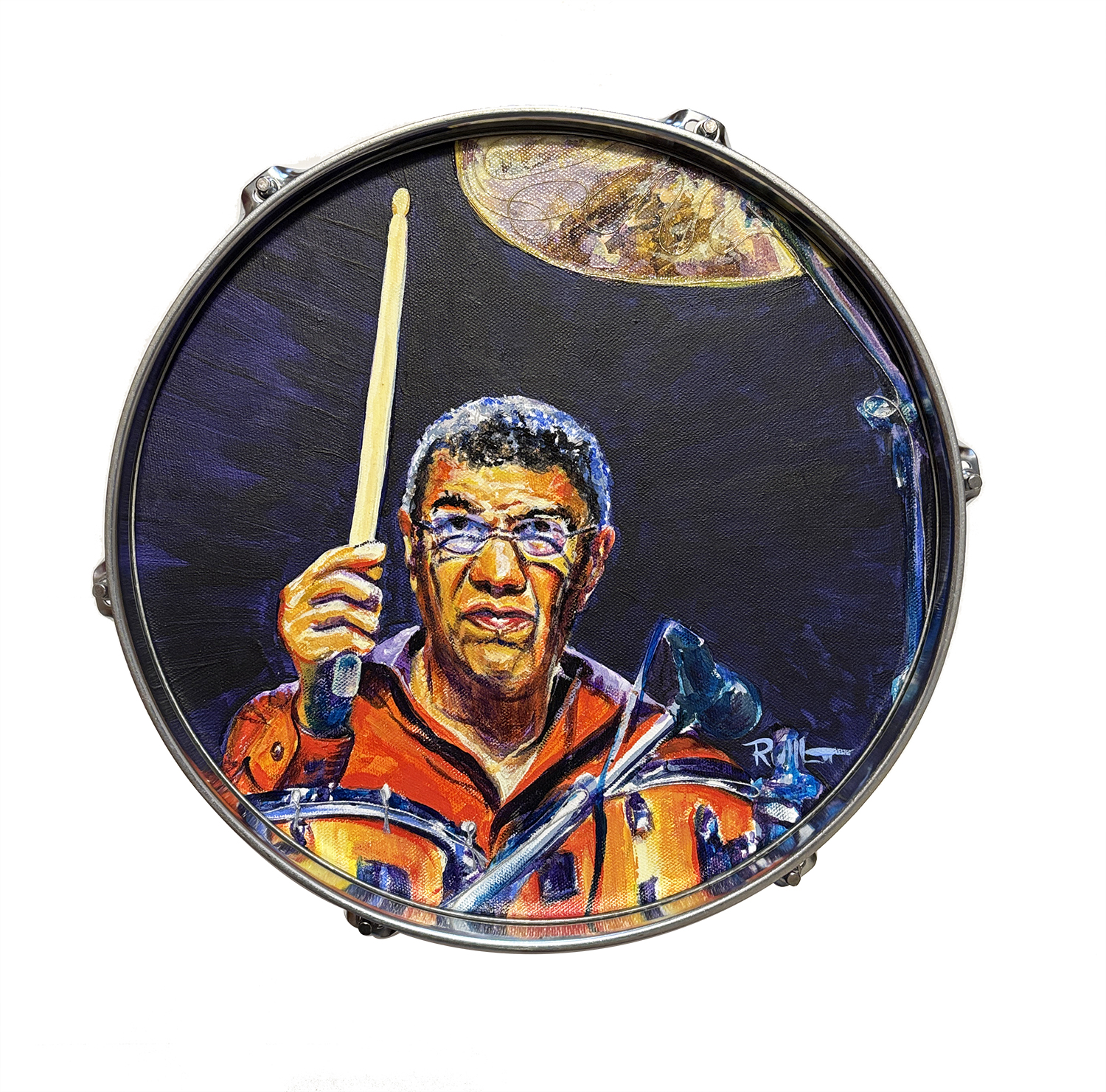
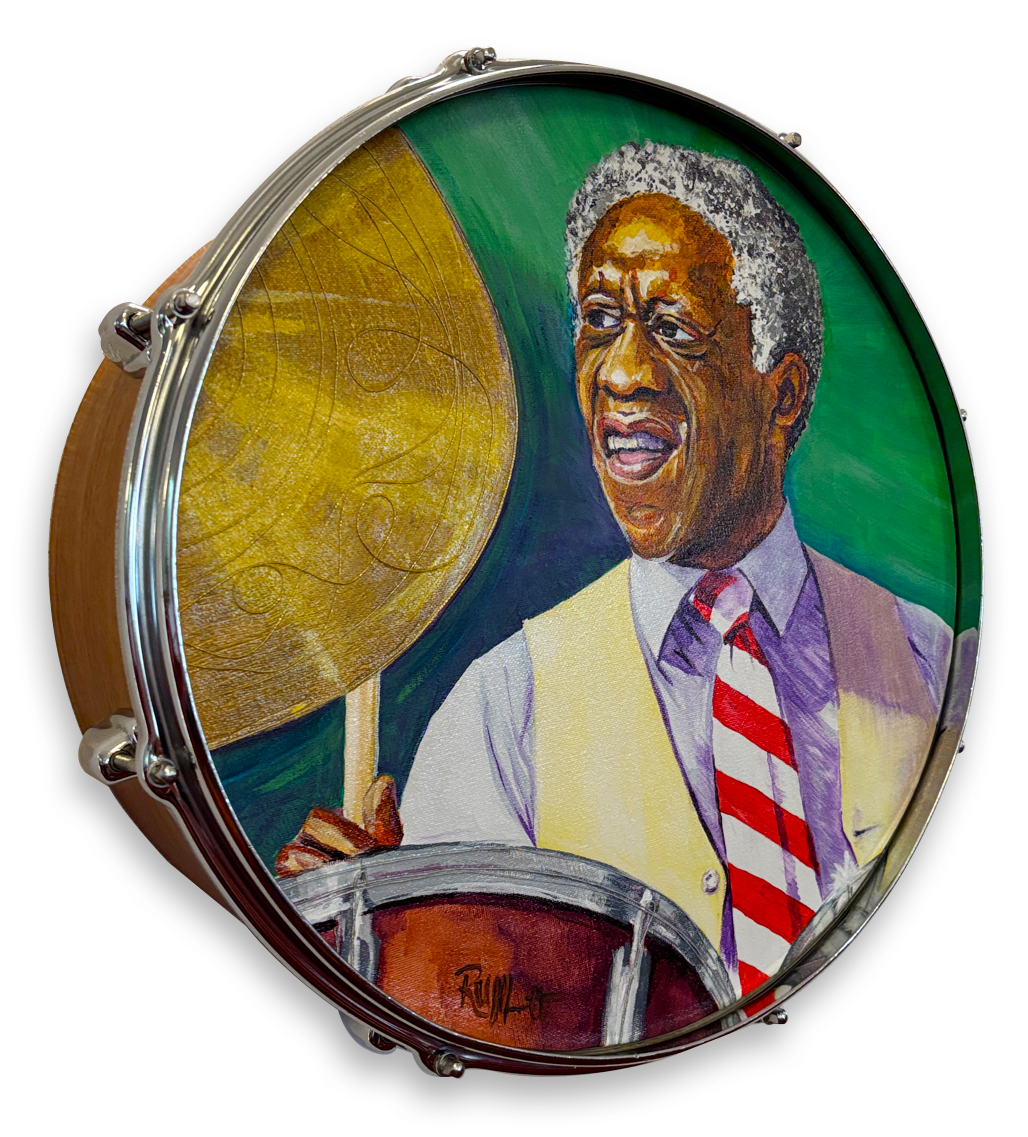
Jack DeJohnette (1942-2025)
14 inches (circular) x 5 inches | Mixed media: Acrylic on canvas with metallic threads, drum shell with mahogany veneer and hardware | 2025
From the collection of Marlon and Cheryl Foster
Mott envisioned the use of drum set toms as 3-dimensional frames for portraits of jazz drummers and the late Harrisonburg drummer and music educator, Marlon Foster, donated this tom tom shell to Mott for the project. Mott asked him, “Marlon, who’s your favorite jazz drummer?” He beamed and immediately replied: “Oh man, without a doubt, it’s Jack DeJohnette!” Presented to Marlon as a surprise on April 6, 2025, during Jazz Worship at Allen Chapel in Staunton.
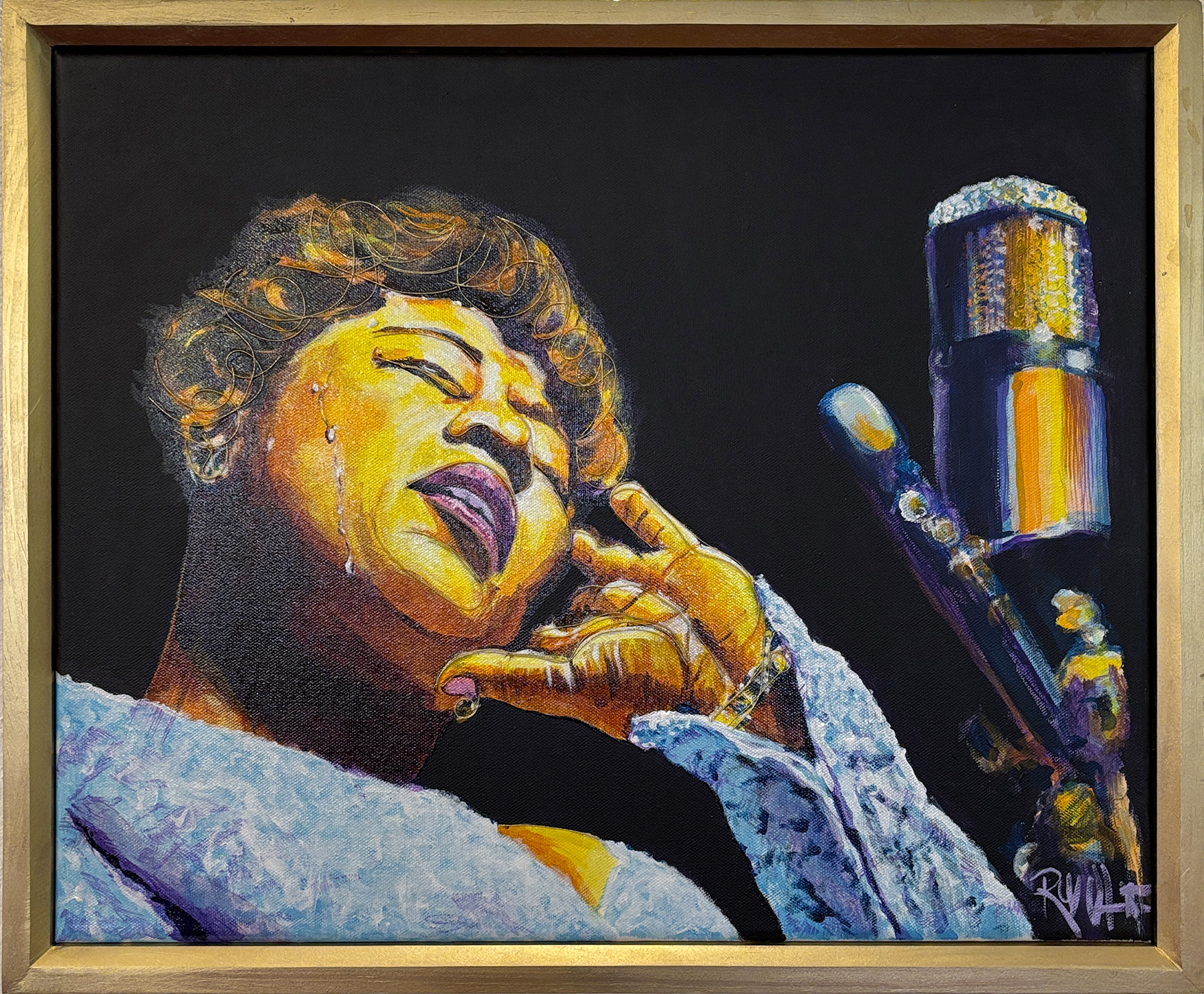
Ella Fitzgerald (1917–1996)
20 x 16 inches | Mixed media: Acrylic on canvas with metallic threads | 2025
From the collection of Jeff Cortazzo
Ella Fitzgerald was an American singer, songwriter and composer, sometimes referred to as the “First Lady of Song”, “Queen of Jazz”, and “Lady Ella”. She was noted for her purity of tone, impeccable diction, phrasing, timing, intonation, absolute pitch, and a horn-like improvisational ability, particularly in her scat singing. Fitzgerald’s most famous collaborations were with the vocal quartet Bill Kenny & the Ink Spots, trumpeter Louis Armstrong, the guitarist Joe Pass, and the bandleaders Count Basie and Duke Ellington.
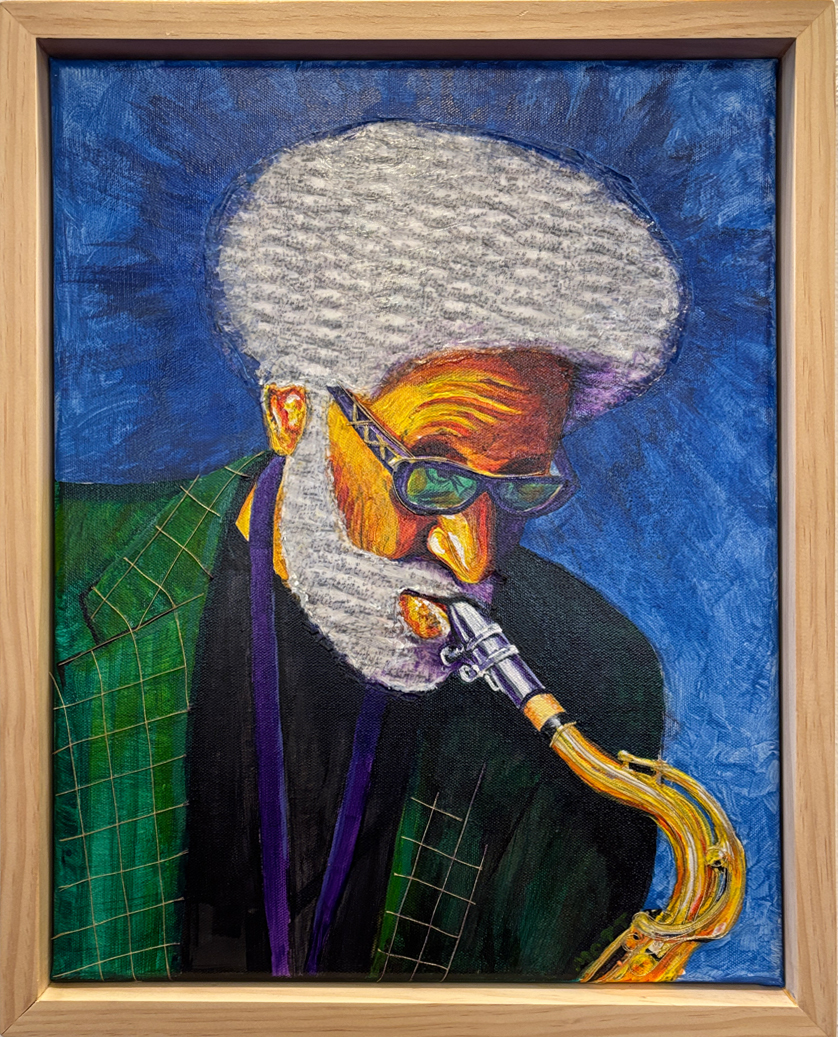
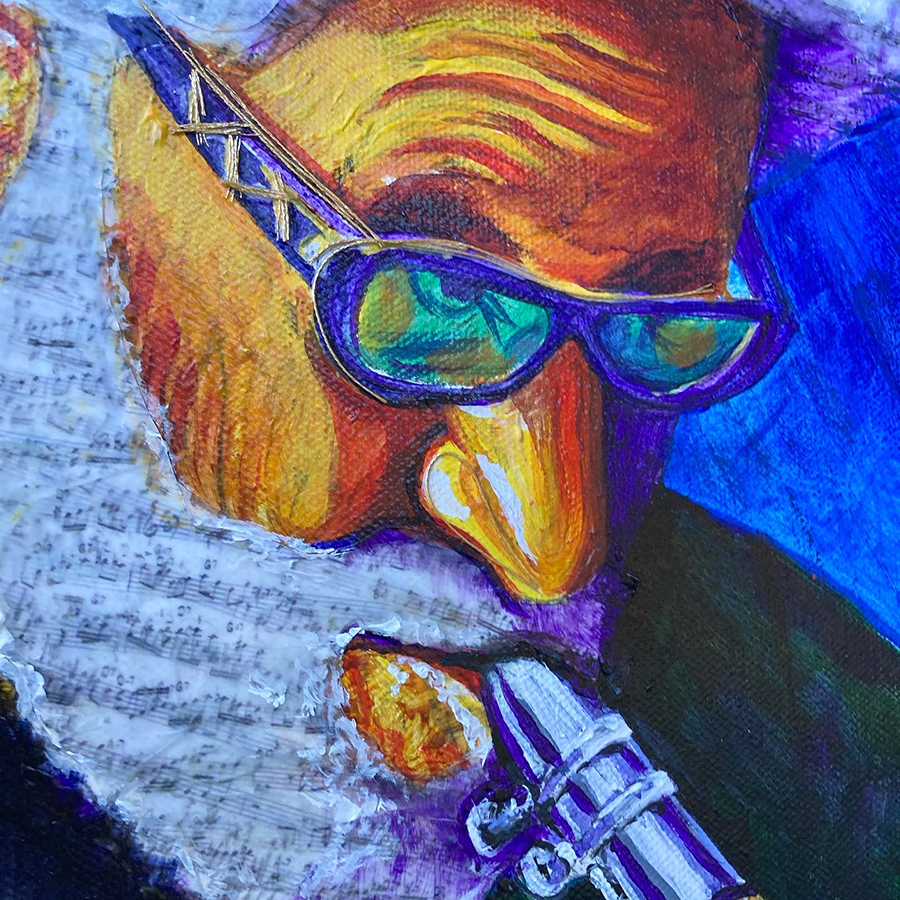
Sonny Rollins (1930-2026)
14 x 18 inches | Mixed media: Acrylic on canvas with metallic threads; measures from Rollins’ compositions layered on tracing paper | 2022
From the collection of Edward A. Scott
American saxophonist and composer, Rollins has been called “the greatest living improviser.” Inspired by the portrait series by photographer John Abbott, Mott envisioned the notes of Rollins’ solos and compositions as the textural shadows in his hair and beard. Mott’s use of metallic threads to accentuate the saxophone and elements of clothing began with this painting, becoming a common thread throughout this series of jazz master portraits.
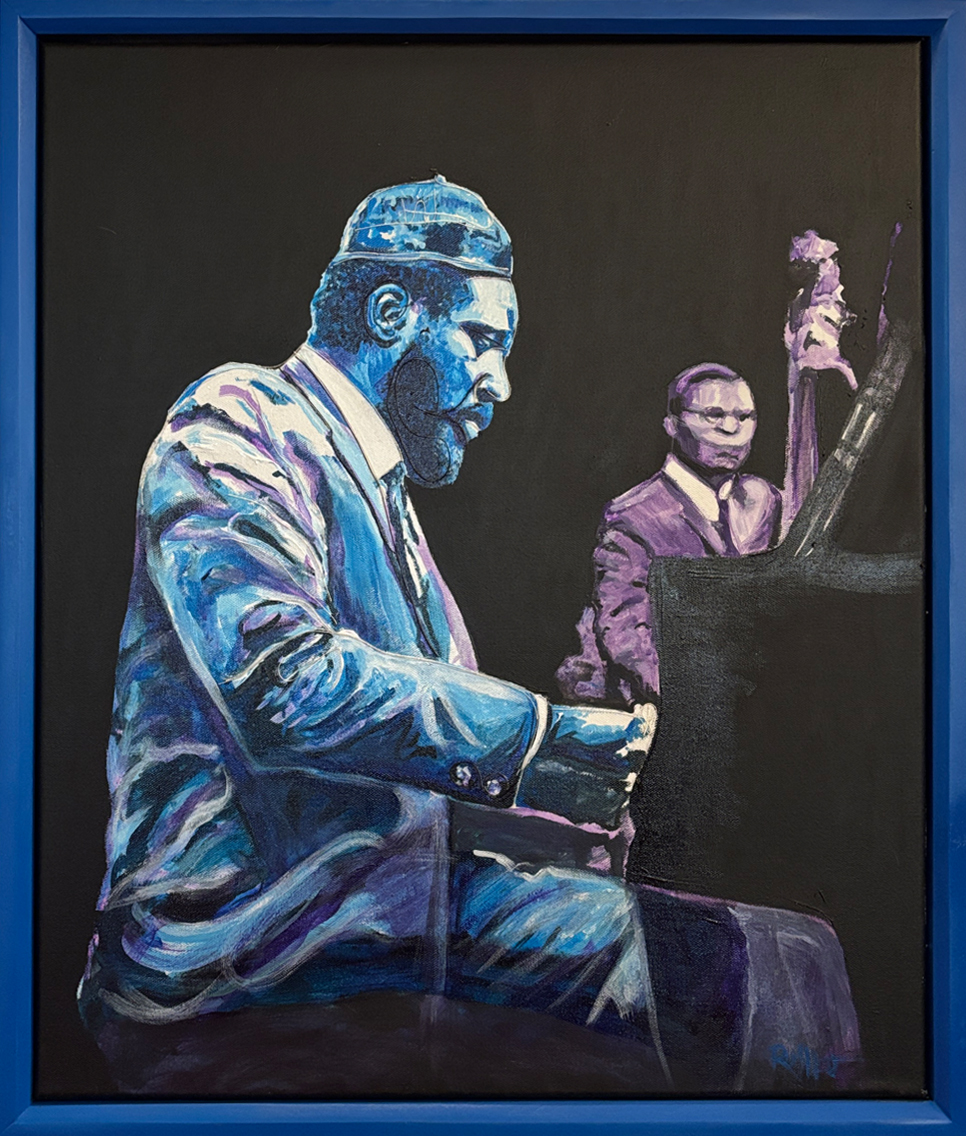
“Blue Monk”: Thelonious Monk (1917–1982)
20 x 24 inches | Mixed media: Acrylic on canvas with metallic threads | 2025
From the collection of Thelonious Mott
Thelonious Sphere Monk was an American jazz pianist and composer. He had a unique improvisational style and made numerous contributions to the standard jazz repertoire. Monk is the second-most-recorded jazz composer after Duke Ellington. Monk’s compositions and improvisations feature dissonances and angular melodic twists, often using flat ninths, flat fifths, unexpected chromatic notes together, low bass notes and stride, and fast whole tone runs, combining a highly percussive attack with abrupt, dramatic use of switched key releases, silences, and hesitations.
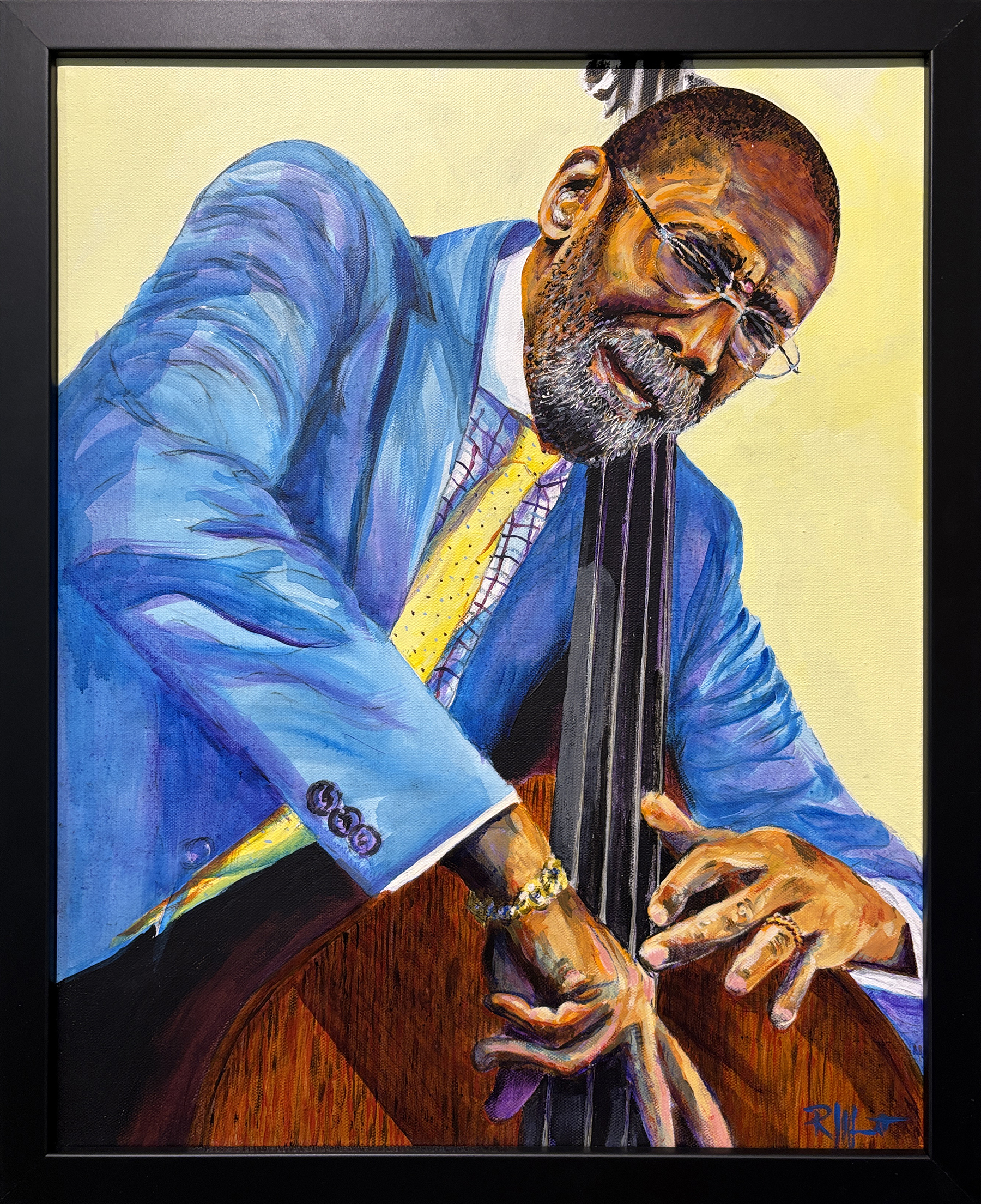
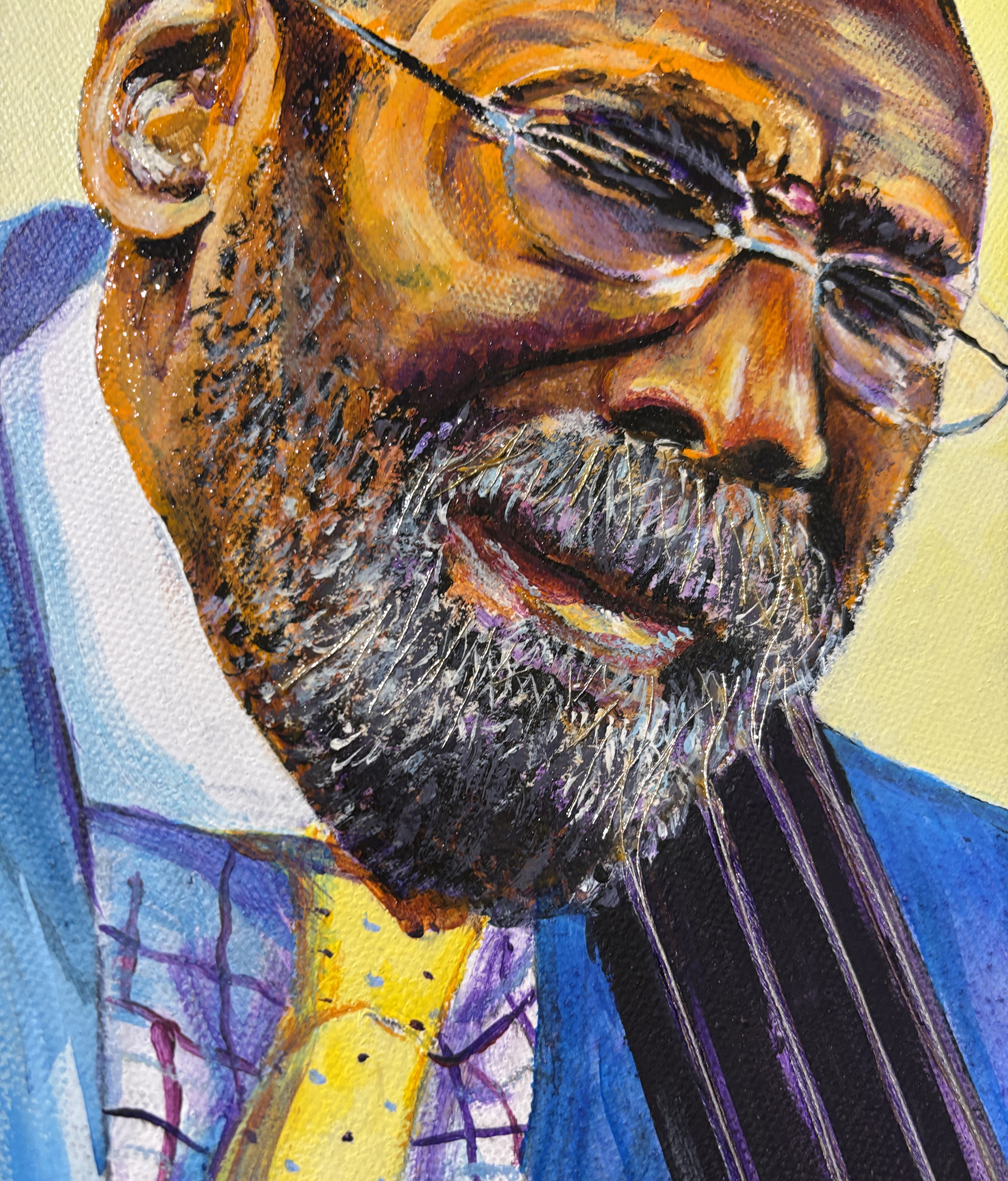
Sir Ron Carter (b. 1937)
16 x 20 inches | Mixed media: Acrylic on canvas with metallic threads | 2025
From the collection of Linwood Bundy Jr.
Ronald Levin Carter is an American jazz double bassist. His appearances on 2,221 recording sessions make him the most-recorded jazz bassist in history. Carter sits on the advisory committee of the board of directors of The Jazz Foundation of America and has worked with the Foundation since its inception to save the homes and the lives of America’s elderly jazz and blues musicians including musicians that survived Hurricane Katrina. Inspired by photographer Jonathan Chimene’s portrait, Mott saw Carter’s playing as “being one with the bass” and intentionally pulled the strings from the hairs of his beard down through the instrument.
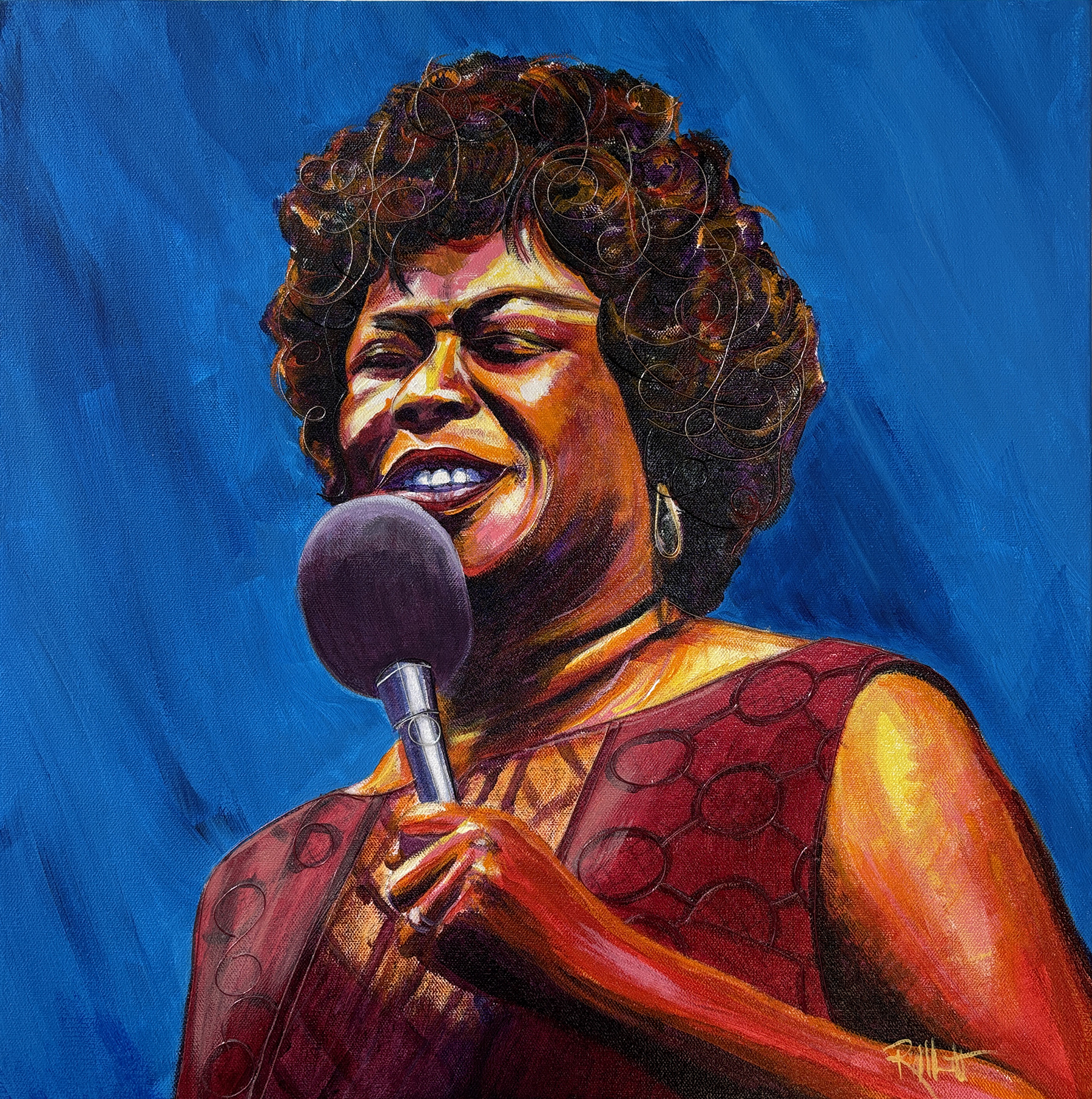
Sarah Vaughan (1924–1990)
20 x 20 inches | Mixed media: Acrylic on canvas with metallic threads | 2025
From the collection of Lauren K. Alleyne and Sybil Davis
Sarah Lois Vaughan was an American jazz singer and pianist. Nicknamed “Sassy” and “The Divine One”, she won two Grammy Awards, including the Lifetime Achievement Award, and was nominated for a total of nine Grammy Awards. She was given an NEA Jazz Masters Award in 1989. Critic Scott Yanow wrote that she had “one of the most wondrous voices of the 20th century”. The James Moody Jazz Festival hosts an annual jazz vocalist competition named for Vaughan. The Sarah Vaughan International Jazz Vocal Competition is also known as the SASSY Awards for Vaughan’s nickname.
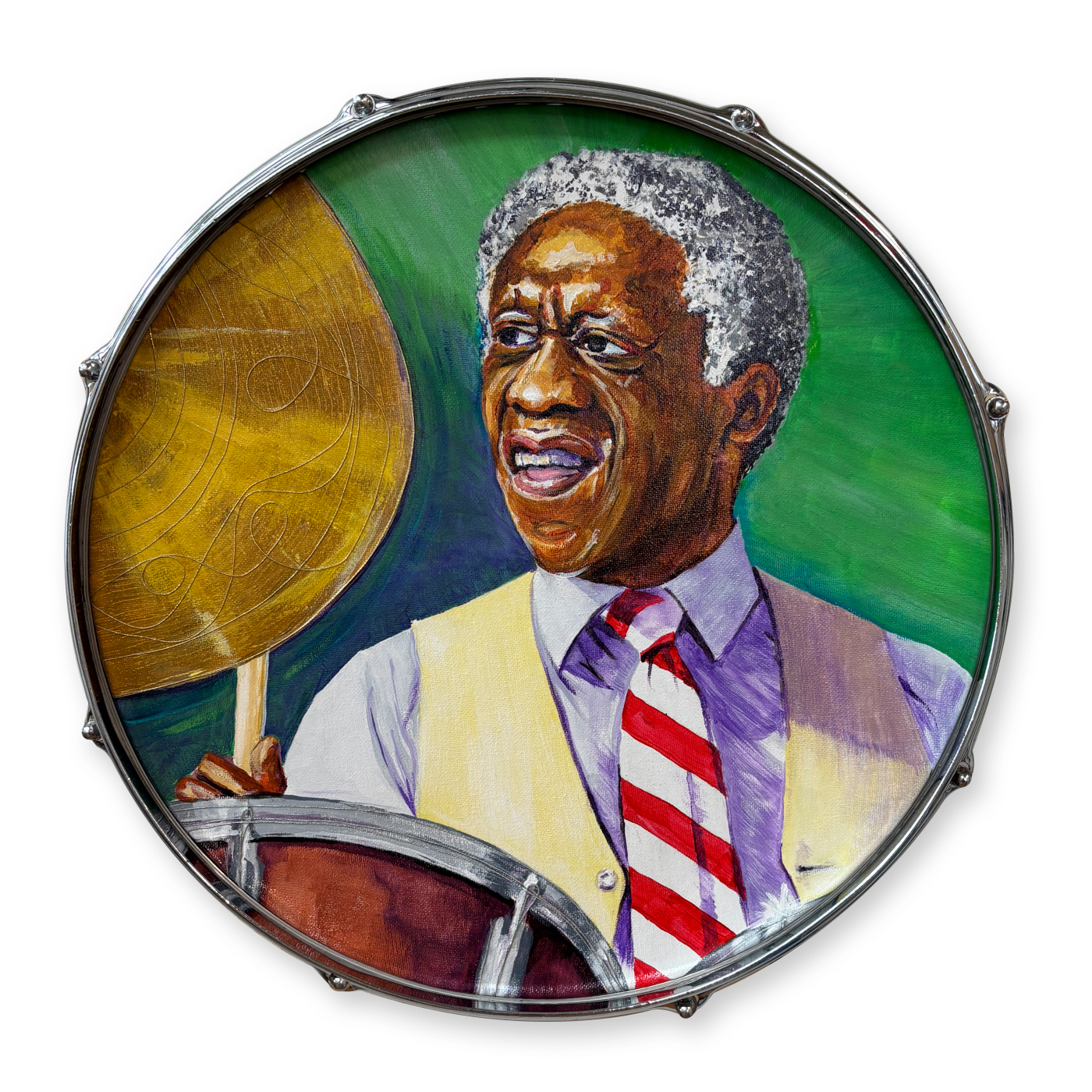
Art Blakey (1919–1990)
16 inches (circular) x 6 inches | Mixed media: Acrylic on canvas with metallic threads, drum shell with mahogany veneer and hardware | 2025
American jazz drummer and bandleader, Art Blakey, is best known for co-founding The Jazz Messengers with pianist and composer Horace Silver in the mid 1950s. The group was formed as a collective of contemporaries, but over the years the band became known as an incubator for young talent, including Freddie Hubbard, Wayne Shorter, Lee Morgan, Benny Golson, Hank Mobley, Curtis Fuller, Chuck Mangione, Chick Corea, Keith Jarrett, Cedar Walton, Woody Shaw, Terence Blanchard, Javon Jackson and Wynton Marsalis.
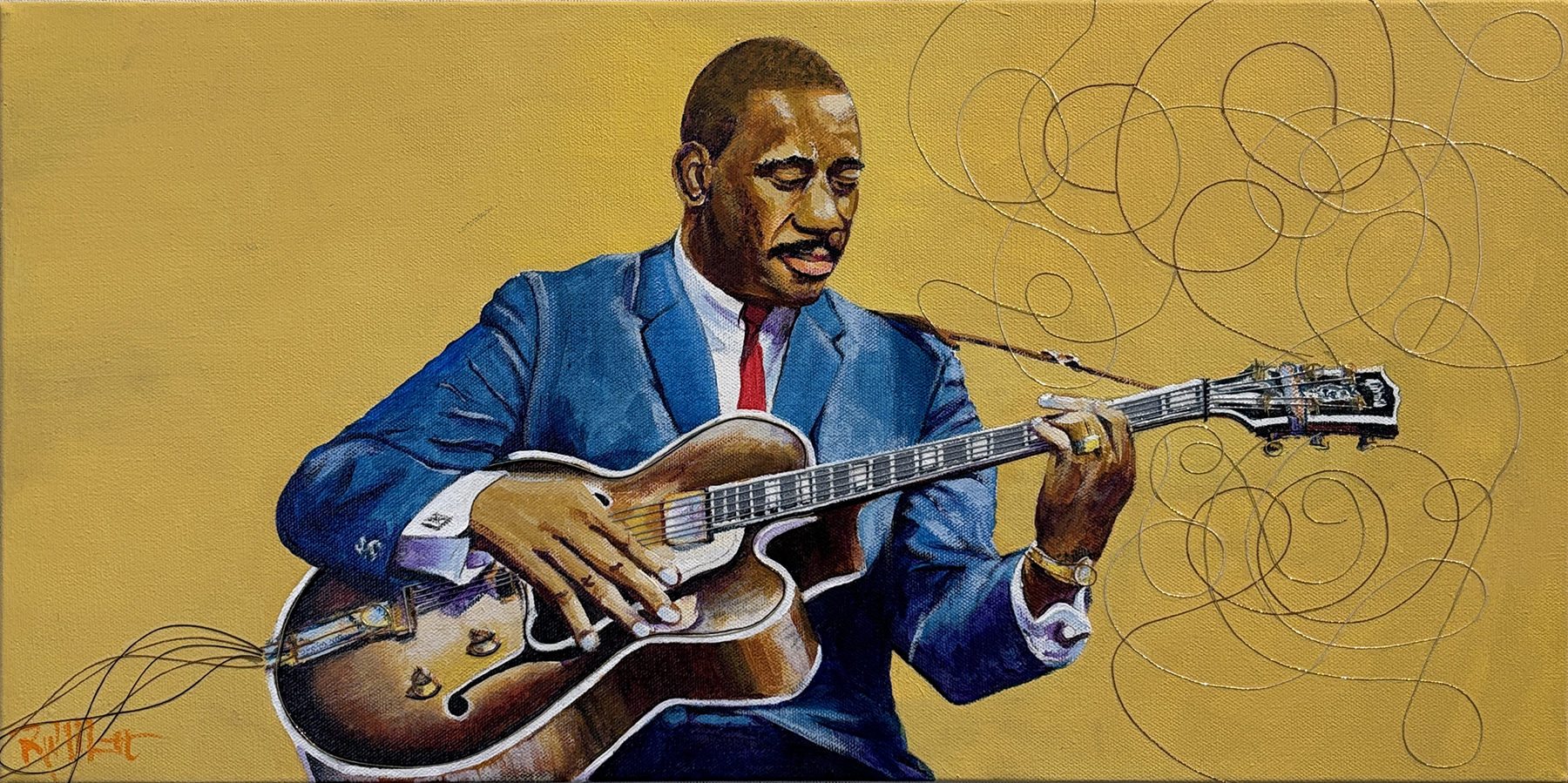
Wes Montgomery (1923–1968)
24 x 12 inches | Mixed media: Acrylic on canvas with metallic threads | 2025
From the collection of Brian Mesko
John Leslie “Wes” Montgomery was an American jazz guitarist. Montgomery was known for his unusual technique of plucking the strings with the side of his thumb and for his extensive use of octaves, which gave him a distinctive sound. His recordings up to 1965 were oriented toward hard bop, soul jazz, and post bop, but around 1965 he began recording more pop-oriented instrumental albums that found mainstream success. Mott envisioned the guitar strings morphing from the “input” through Montgomery’s fingers to create the jazz fusion and smooth jazz styles of his later recordings.
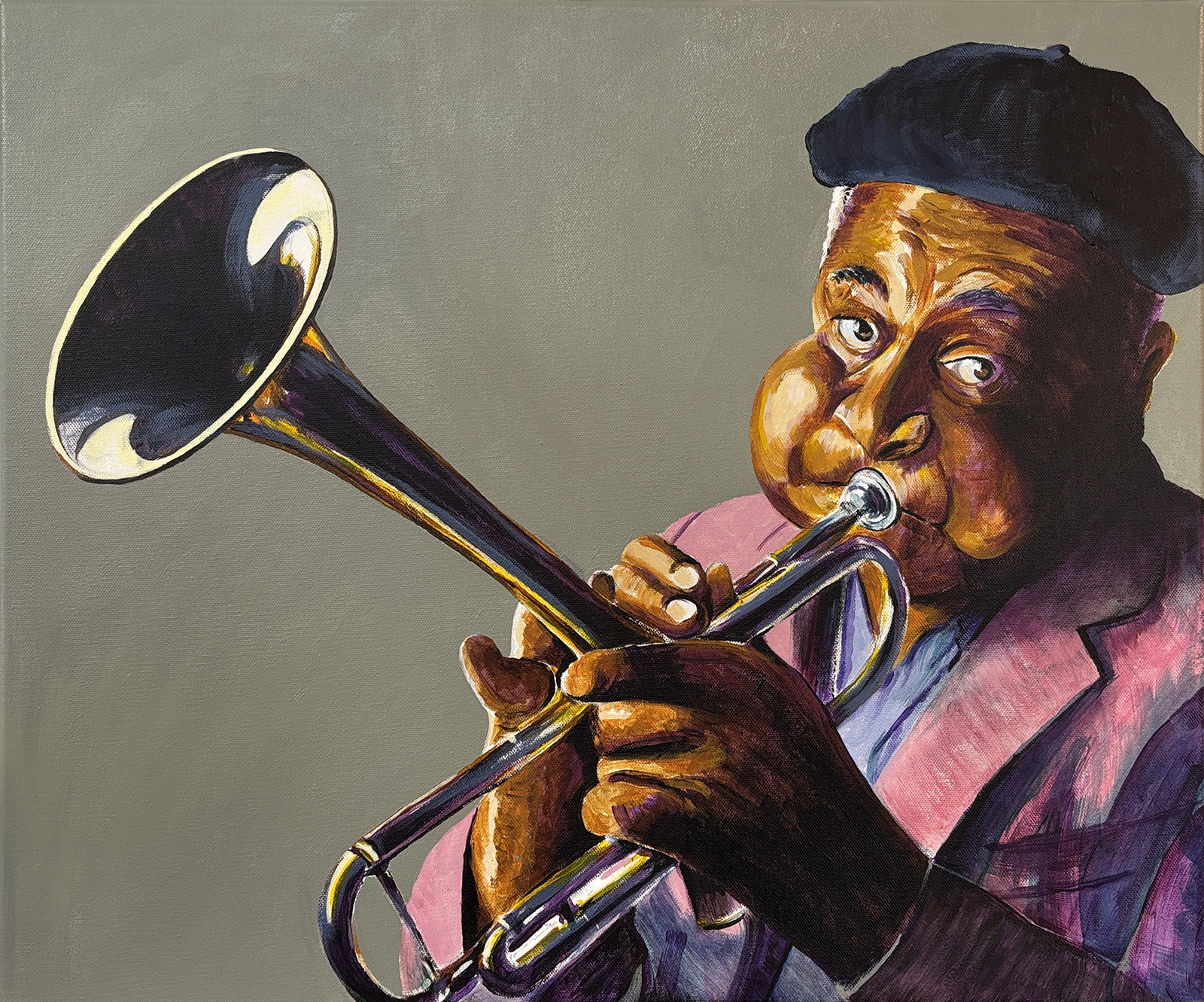
Dizzy Gillespie (1917–1993)
24 x 20 inches | Mixed media: Acrylic on canvas with metallic threads | 2025
From the collection of Bill Mingst
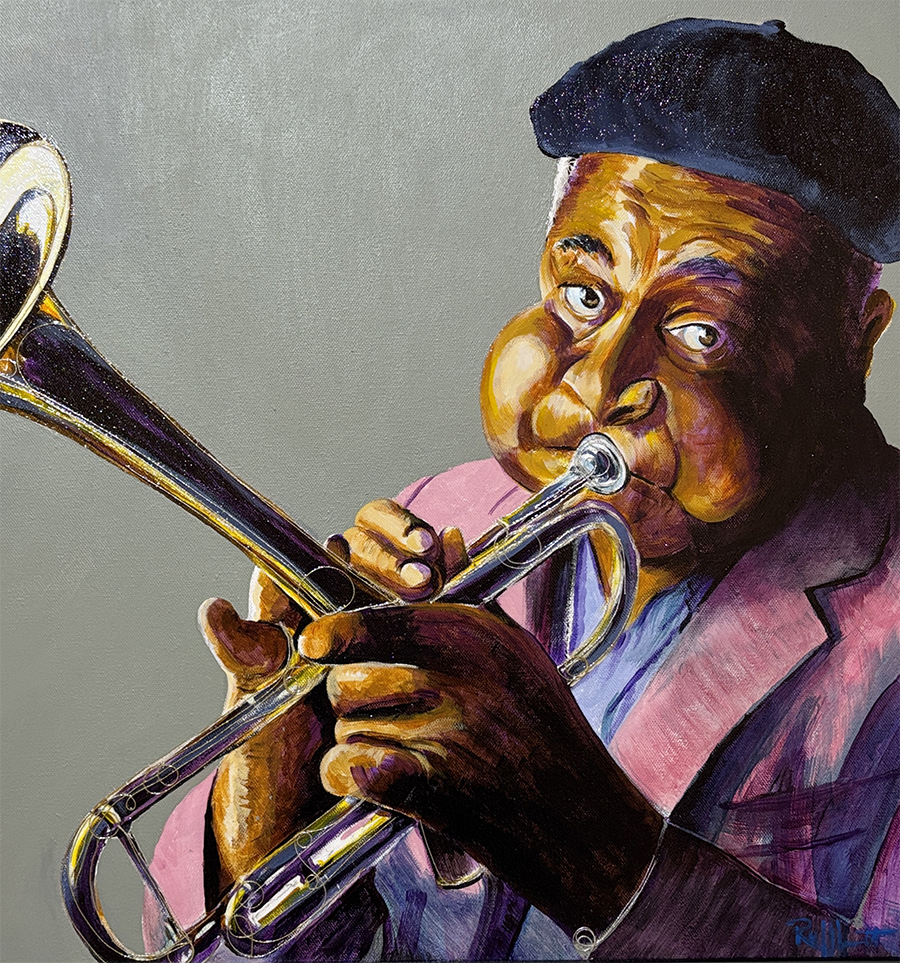
John Birks “Dizzy” Gillespie was an American jazz trumpeter, bandleader, composer, educator and singer. He was a trumpet virtuoso and improviser, building on the virtuosic style of Roy Eldridge but adding layers of harmonic and rhythmic complexity previously unheard in jazz. His combination of musicianship, showmanship, and wit made him a leading popularizer of the new music called bebop. His beret and horn-rimmed spectacles, scat singing, bent horn, pouched cheeks, and light-hearted personality have made him an enduring icon.
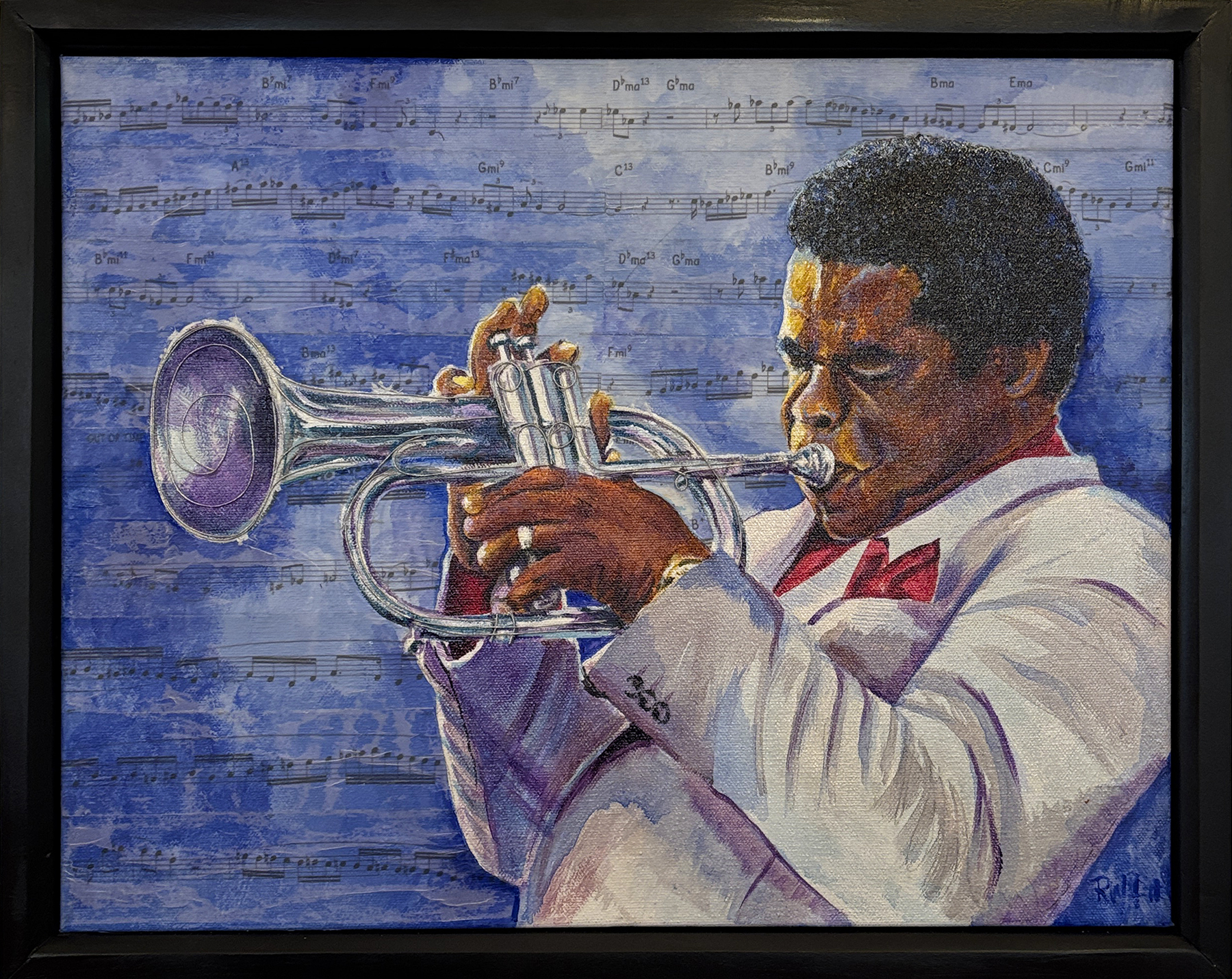
Freddie Hubbard (1938–2008)
18 x 14 inches | Mixed media: Acrylic on canvas with metallic threads; measures from Hubbard’s solo transcriptions on tracing paper | 2025
From the collection of Kenny Rittenhouse
Frederick Dewayne Hubbard was an American jazz trumpeter. He played bebop, hard bop, and post-bop styles from the early 1960s onwards. His unmistakable and influential tone contributed to new perspectives for modern jazz and bebop. In 1977, Hubbard joined the all-star V.S.O.P. band, which also featured Herbie Hancock, Tony Williams, Ron Carter and Wayne Shorter. Hubbard’s trumpet playing was featured on the track “Zanzibar” from the 1978 Billy Joel album 52nd Street (the 1979 Grammy Award Winner for Best Album).
Let’s do this.
Robert Mott is ready to create your next masterpiece. Whether a brand design, chalk drawing or commissioned painting, tell us what you’re interested in and Robert will be back in touch shortly to discuss making this art come to life!
Phone: 540.290.1677
Email: robert@robertmottdesigns.com